
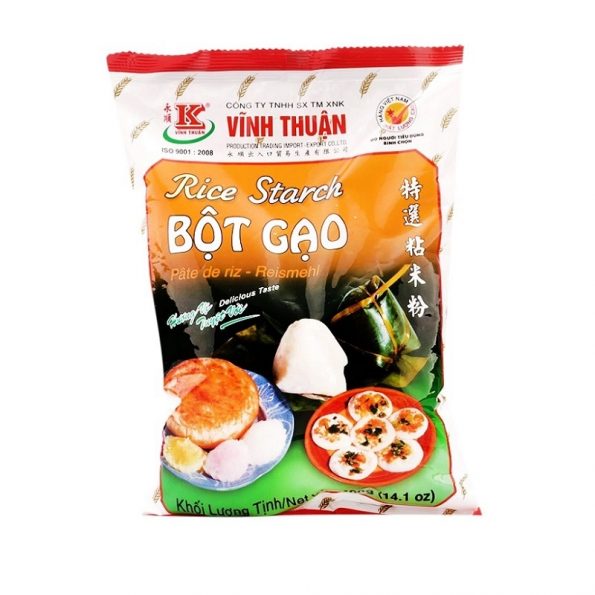

Rice starch is a type of starch derived from rice grains. Here’s some information about rice starch:
- Extraction: Rice starch is extracted from rice grains through a process that involves washing, soaking, grinding, and separating the starch from the rice flour.
- Appearance and Texture: Rice starch is a fine, white powder with a smooth texture. It is similar in appearance to other starches such as cornstarch and tapioca starch.
- Gluten-Free: Like rice flour, rice starch is naturally gluten-free, making it suitable for individuals with gluten sensitivities or celiac disease.
- Thickening Agent: Rice starch is commonly used as a thickening agent in various culinary applications, including soups, sauces, gravies, and puddings. It has a neutral flavor and a high viscosity, which makes it effective for thickening liquids.
- Texture Enhancement: In addition to its thickening properties, rice starch is often used to improve the texture of food products. It can be used to create smooth and creamy textures in dairy products, desserts, and frozen treats.
- Glazing Agent: Rice starch can also be used as a glazing agent to give a glossy finish to baked goods, confectionery, and certain fried foods.
- Application in Food Industry: Rice starch is widely used in the food industry as a versatile ingredient in various processed foods, including noodles, snacks, cereals, and baby foods.
- Storage: Rice starch should be stored in an airtight container in a cool, dry place away from moisture and direct sunlight.
In summary, rice starch is a versatile ingredient with various culinary applications. It is valued for its neutral flavor, high viscosity, and gluten-free properties, making it suitable for a wide range of recipes and food products.



Reviews
There are no reviews yet.